Take a moment to upload your own receipts and test Nanonets OCR capabilities. Get a firsthand look at how it works on your own documents.

Receipt OCR is a powerful technology that leverages artificial intelligence and machine learning to extract key data from receipts and other financial documents. As businesses increasingly move toward digital record keeping and automation, receipt OCR has become a vital tool for streamlining accounting, expense management and bookkeeping processes.
Free DemoNo need to spend time training a receipt OCR model from scratch - our solution already recognizes a wide variety of receipt fields.

Say goodbye to errors and hello to real-time document processing. Nanonets takes care of this and lets you focus on what matters most - your business.
Capture or import data from any source or in any format including, images, PDFs, scans, paper documents, emails, cloud storage, APIs and more.
Our OCR APIs have been rigorously tested and pre-trained on millions of documents, ensuring high accuracy and reliability from day one.
Set up completely automated workflows to handle file imports, data formatting, data validation, approvals, exports and integrations.
Reduce time spent on inefficient manual tasks and avoid data entry or validation errors that could burn a hold in your pocket.
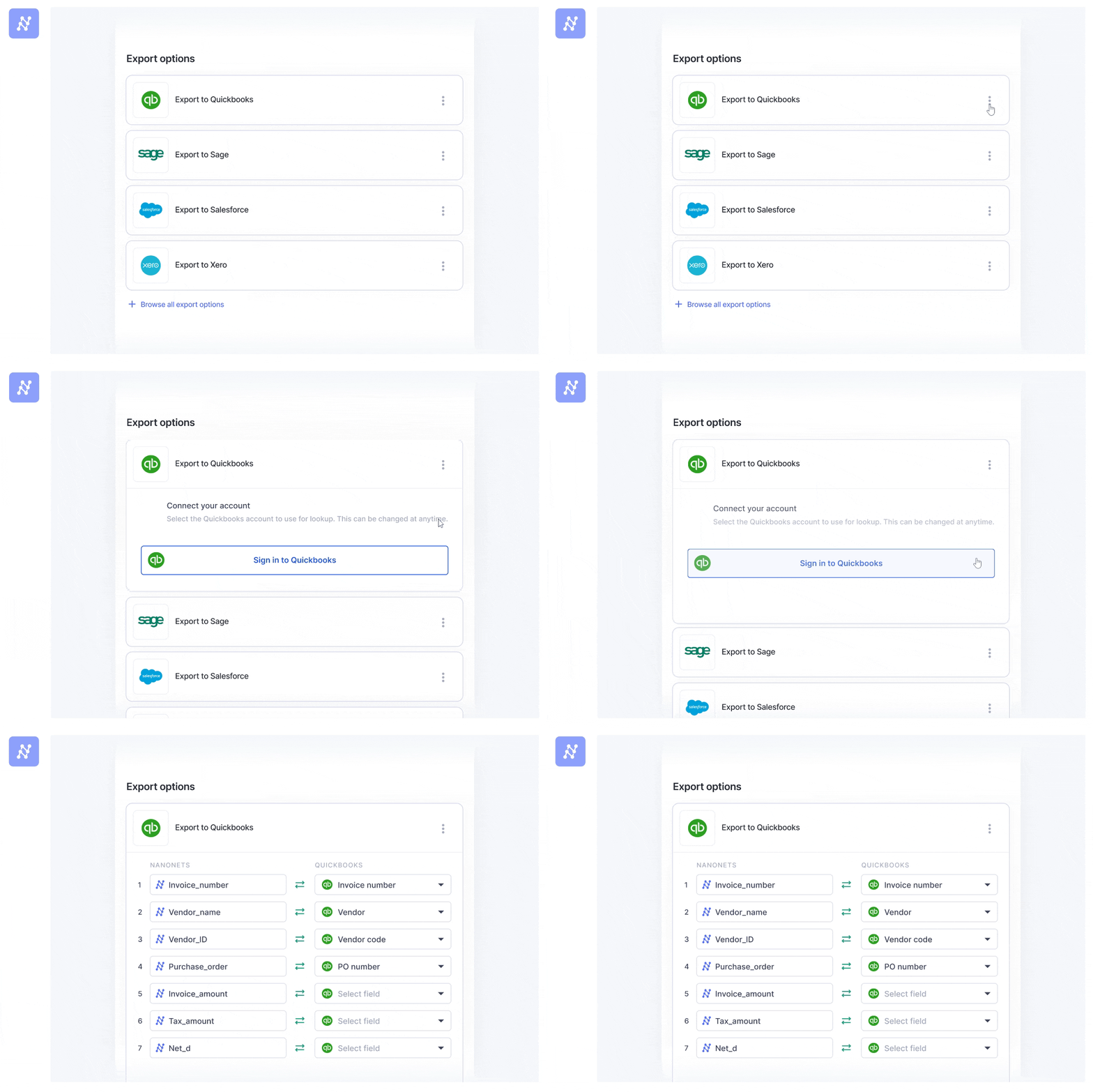
Integrate your existing business tools seamlessly with Nanonets to automate data collection, exports storage, bookkeeping, and much more.
Turn your organisation 10x more productive by allowing teams to focus entirely on core activities while Nanonets handles everything else.
Discover important details about our product.
The primary goal of using OCR for receipts is to automate data entry for expense management, financial record-keeping, and accounting. Its key objectives are to:
Receipt OCR APIs provide extracted data in standard, machine-readable formats for seamless system integration.
Typical output formats:
Advanced APIs may also offer PDF with searchable text layer or direct integration with accounting software.
Yes, absolutely. A robust Receipt OCR API, especially within an Intelligent Document Processing (IDP) platform, validates extracted data against predefined expense categories or company policies. This ensures data integrity, compliance, and automates accounting.
How it works:
This transforms raw receipt data into compliant, categorized, audit-ready financial entries, reducing manual review.
Receipt OCR fundamentally enhances financial accuracy, audit readiness, and expense visibility by digitizing, structuring, and validating expense data.
Receipt OCR transforms expense data into a reliable, transparent, actionable asset for financial management and robust compliance.
Using Receipt OCR yields substantial cost savings for individuals/businesses by directly reducing labor, minimizing errors, and optimizing financial processes.
Key cost savings:
These factors lead to compelling ROI for Receipt OCR, with quick payback, justifying investment for efficient financial management.
Receipt OCR has significant applications for personal finance tracking and budgeting, transforming a tedious manual chore into a streamlined, accurate, and insightful process for individuals to manage money effectively.
Key applications for personal finance:
Receipt OCR transforms personal finance management from cumbersome to proactive and insightful.
Testing the performance and accuracy of a Receipt OCR API before full deployment is crucial to ensure it meets your business needs. Thorough testing identifies issues, optimizes configurations, and builds confidence.
Key steps to test performance and accuracy:
Meticulous testing helps you understand API capabilities and ensures it meets your requirements for successful deployment.
Yes, absolutely. For popular accounting software and expense management platforms, pre-built connectors are widely available from Receipt OCR API providers or through integration platforms. These significantly simplify the integration process, often eliminating extensive custom coding.
Why Pre-built Connectors are Essential:
Where to Find Pre-built Connectors:
Common Platforms with Pre-built Connectors include: Accounting Software (QuickBooks Online/Desktop, Xero, NetSuite, Sage, FreshBooks, Zoho Books), Expense Management Systems (Expensify, Concur, Spendesk, Divvy, Brex), and ERP Systems (SAP, Oracle, Microsoft Dynamics). These connectors lower the technical barrier, allowing businesses to leverage powerful AI without extensive development.
Yes, absolutely. Scalability is a critical consideration for high-volume Receipt OCR API usage, especially for businesses processing thousands or millions of receipts monthly. A robust API must handle increased load without performance degradation.
Key scalability considerations:
Selecting a Receipt OCR API built with high scalability ensures automation confidence as volume grows.
Yes, absolutely. Most reputable Receipt OCR API providers understand the importance of testing their technology with real-world data before commitment. Therefore, free trials, demo versions, or limited free tiers are commonly available.
Here's what you can typically expect:
How to Utilize Trials/Demos Effectively: Test with diverse, real-world receipts, evaluate key features beyond basic extraction, and assess integration with your target software. These are invaluable resources for evaluating an Receipt OCR API's suitability.