Manufacturing
Turn your manufacturing processes into AI agents
Nanonets converts your supplier quality agreements, receiving SOPs, PO terms, and part-master knowledge into AI agents that run your manufacturing processes — from goods receipt to payment.
 Nanonets
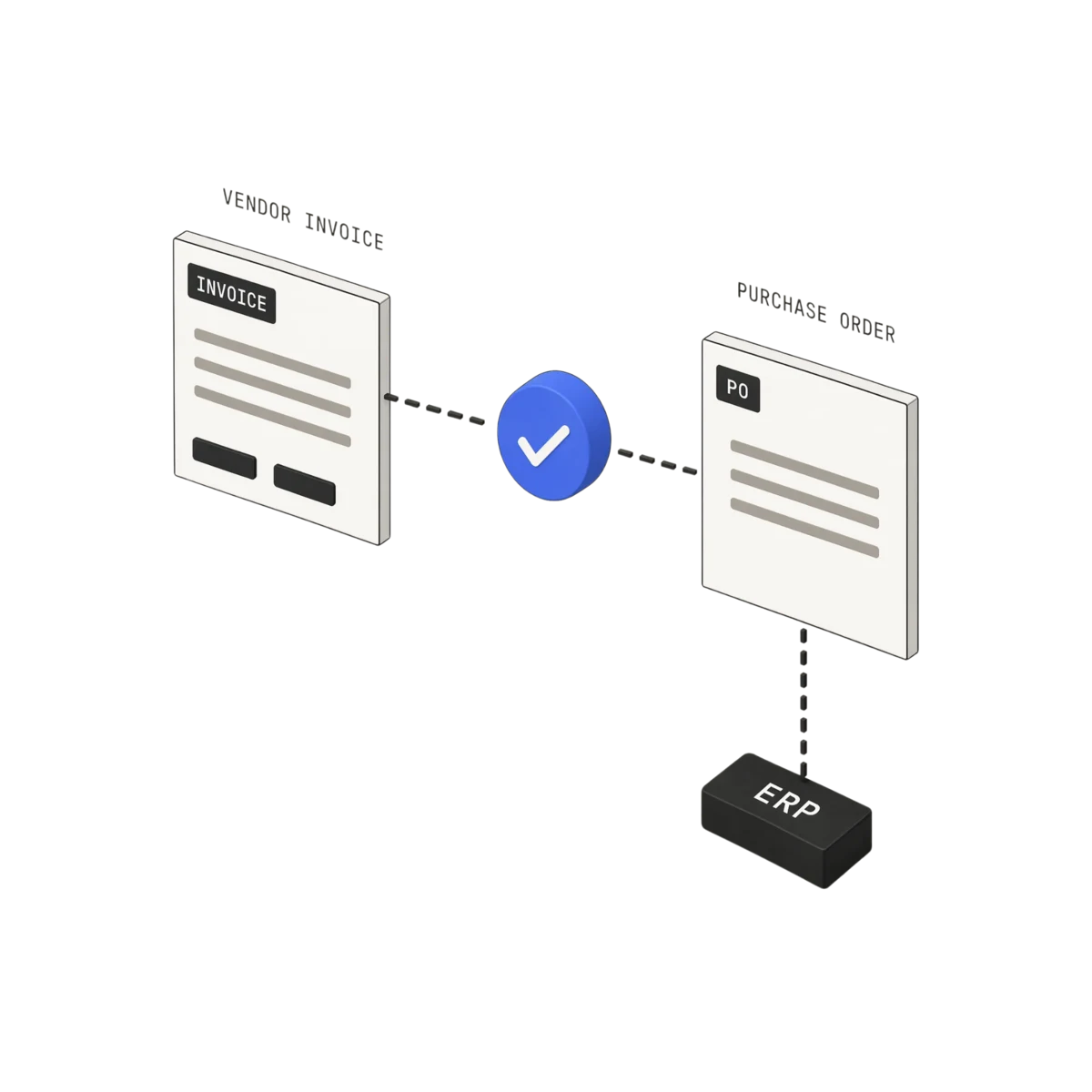
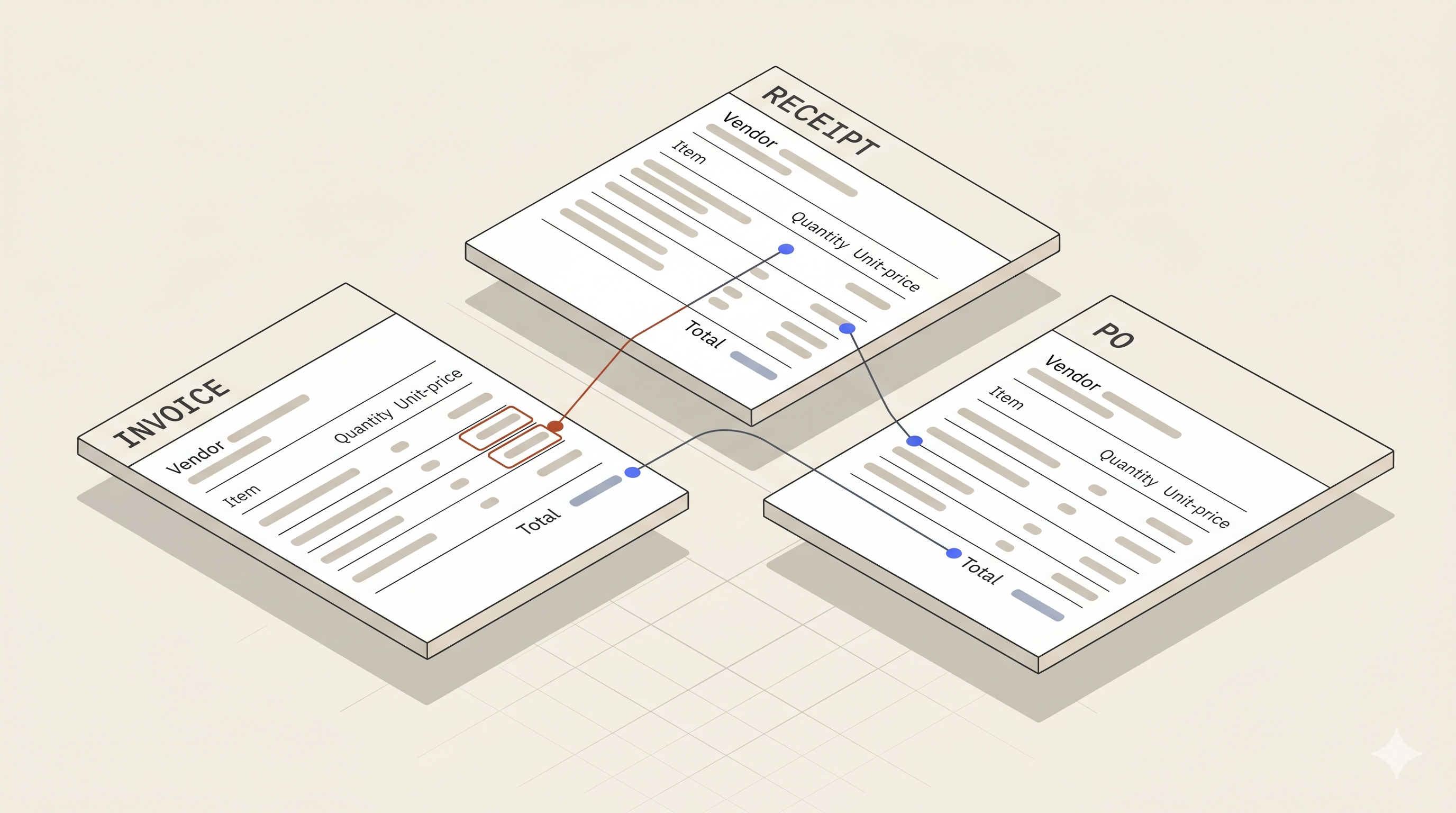
Three-way match
This week- 842PO lines matched
- 58qty variances
- 23missing certs
- 93%auto-matched
- INV-40218Corex Steel Mills$64,900Matched
- INV-40231Kessler Bearings$12,480Matching
- INV-40266Halden Polymers$8,120Held
- INV-40312Arden Forgings$27,600Approval
- INV-40355Novy Fasteners$2,340Matched






Used by 35% of the Fortune 500 and 10,000+ enterprises















Top manufacturing teams
put Nanonets to work on:
- Production batch records
- Maintenance work orders
- Warranty & returns claims
- Three-way matching
- Supplier invoice processing
- Goods receipt notes
- Purchase order entry
- Certificates of conformance
- Material test reports
- Quality inspection reports
- Non-conformance reports
- Packing list checks
- Supplier onboarding
- Engineering change notices
- Bill-of-materials updates
- RFQ & quote comparison
- Shipping & customs docs
Turn a manufacturing SOP into a working agent — in one upload.
Import the supplier quality agreement, receiving procedure, or work instruction your plant maintains. Nanonets reads it, builds the agent, and shows which clause produced each rule.
- 01Import process docsDrop in the supplier quality agreement, incoming-inspection SOP, or receiving procedure your plant already maintains — PDF, DOCX, scans.
- 02Agent auto-builtNanonets parses them into a context graph. It outlines the agent's role, splits the process into phases, and adds the tools each step needs.
- 03Review, approve, runEvery learned rule is explained and traced to the exact text it came from. Agents take decisions strictly based on these rules.
Supplier quality manual §4.3
“…every shipment of raw material shall arrive with a certificate of conformance citing the heat or lot number; material received without a valid certificate is quarantined and may not be released to production…”
Nanonets extracts rule
If a delivery arrives with no certificate matching the heat or lot number, quarantine the lot and block the goods receipt.
Help agents solve the most complex problems with context graphs.
A supplier shipped 498 of 500 units against an open PO on a blanket agreement, invoiced 4% above the contracted price, while the mill cert sits in an email thread — do we receive it and pay?
One question. Five kinds of context, each in a different system — the goods receipt doesn't know the contracted price, and the ERP doesn't know where the cert went.
How the Context Graph works →Receiving & quality SOP
Policy context ➔ What may we receive short?
Under-delivery above 1% needs buyer sign-off
ERP / PO & vendor master
System-of-record context ➔ Which PO and agreement?
PO-44120 · blanket agreement, 12-month price hold
Contract price & tolerances
Computed context ➔ How far off contract?
4% over · $980 above the held price
Supplier email & portal
Conversation context ➔ Where is the mill cert?
Heat 8842 cert attached to a supplier reply, unfiled
Goods receipt SOP
SOP context ➔ Who approves, in what order?
Buyer → quality → logged against the GRN
How it works
Ingest. Extract. Match. Update. The agent handles it, and hands off when it should.
 NanonetsNanonetsNanonetsNanonets
Agents used in manufacturing
35% of Fortune 500 and 10,000+ companies use Nanonets
Customer story · Schneider Electric
“Verifying every requisition against its vendor quote by hand was tying up teams in dozens of countries. Nanonets extracts each quote so our automation confirms the match before the PO goes out. It's already freed up multiple full-time roles in Europe.”

- PR-to-quote verification
- ~80 people → automated match
- Match rate
- 90%+
- Duplicate files
- ~60% reprocessed → detected & skipped
- Pages verified in 4 months
- 500K
Teams using Nanonets see
- 95%Straight-through processing
- 80%Reduction in associated costs
- 15×Quicker turnaround times
Built for how modern
enterprises work.
Nanonets meets the highest industry standards for your security & compliance. We include all default controls that you'd expect, including SAML SSO, audit logs, IP allow-listing, data lifecycle management, and much more.
- SSO & SCIM
- SAML, OIDC, and SCIM user provisioning with Okta, Azure AD, Google Workspace.
- Role-based access
- Full RBAC and fine-grained access control across orgs, workspaces, agents.
- Audit logs
- Every agent run, approval, and data access is recorded, and streams to your SIEM.
- Private deployment
- VPC, single-tenant cloud, or on-prem. Choose your infrastructure and network policies.
- Data residency
- Pin data processing to US, EU, APAC regions. Customer data never leaves your boundary.
- Human-in-the-loop
- Configure approval gates to route edge cases to Slack, Teams, or email for review.
- Encryption at rest & in transit
- AES-256 at rest, TLS 1.3 in transit. BYOK supported for all customer-managed keys.
- Usage quotas & rate limits
- Per-team budgets and API quotas with real-time cost dashboards. No surprises.
Security built in, not bolted on.
Your data and your company brain never leave your boundary. Independently audited every year, with compliance controls enforced by the platform — not promised on a page.
Held and current — not roadmap targets.
 SOC 2 Type IIOngoing security controls
 GDPREU data protection
 ISO 27001Global ISMS standard
 HIPAABAA on enterprise plans
See it run on your process.
From AI-native hypergrowth companies to Fortune 500 enterprises,
Nanonets automates business processes so teams can focus on what matters.